
An old European town rewards slow looking. Light bounces off pale stone, a delivery bicycle crosses a square, and three strangers arrange themselves into a scene you could not have planned. The temptation is to lift the camera at once. The better habit is to pause, read the street, and work out how to make the picture without turning the place into a stage set. Etiquette is not a tax on good photography. It is what lets you keep working in a small place where people notice who is respectful and who is not.
Read the Street Before You Raise the Camera
Before you raise the camera, watch the street for a few minutes. Old towns have rhythms: the café owner stacking chairs, the school run, the shopkeeper sweeping the step, the afternoon light moving down a wall. Stand to one side and let those patterns show themselves. You will spot a doorway that frames a lane, a patch of sun that lasts ten minutes, or a corner where people naturally slow down.
Location matters too. On a narrow street, the best viewpoint often sits in a recess, an archway, or the edge of a square—somewhere you are not part of the traffic. Avoid planting yourself in the middle of a crossing to get a symmetrical shot. Step out, take the frame, step back. If a queue forms behind you, move before someone has to ask.
Ask, Accept, and Move On
Photographing a stranger is a small social transaction. Sometimes a nod and a raised camera are enough. At other times, especially in a quiet residential lane, a few words work better. Keep it simple: “Excuse me, may I take your photograph?” If you do not share a language, hold up the camera, point to it, smile, and wait for a response. A quick yes is common in busy tourist areas. A shrug is not a yes. A hand raised, a turned shoulder, or a sharp shake of the head is a clear no.
When the answer is no, say thank you and move on. No explanation is needed, and no one owes you a reason. Do not photograph first and ask forgiveness later, particularly with close portraits. If someone notices after the fact and asks you to delete a picture, delete it. The image is not worth the bad feeling—or the argument.
Extra care applies to children, people in distress, and anyone who looks vulnerable. If you want to photograph a child, ask the parent or guardian. Do not make a composition out of someone’s difficult moment, whether that is an argument, an illness, or a bad day. And if you ask someone for directions or a portrait, do not turn the conversation into a sales pitch for your photography.
A practical middle ground is to show the frame. When someone looks uncertain, turn the camera around and let them see the back screen. It often turns suspicion into a short, friendly exchange. If they are still uncomfortable, thank them and walk away.
Framing the Crowd, Not Fighting It
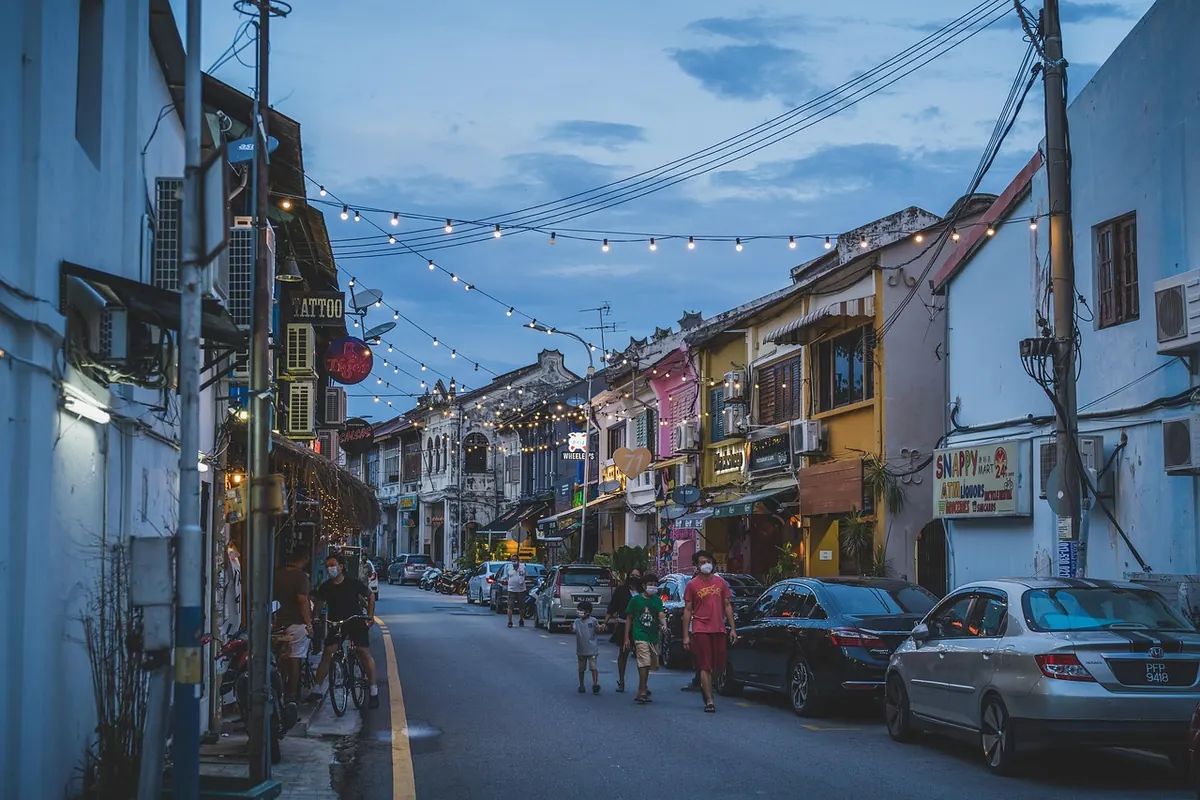
Busy historic streets are not a problem to solve; they are the material. The trick is to use the crowd as layers rather than trying to remove it. Find a background with texture—a painted shutter, a stone arch, a row of café chairs—and wait for people to pass through it. The photographs usually happen in the gaps: a red coat against grey stone, a bicycle entering a slice of light, a waiter crossing behind a couple.
Five framing habits
- Find the background first. Choose your wall, doorway, or patch of light before you choose your subject. Then wait for the street to fill the frame.
- Use frames within frames. Archways, doorways, market stalls, and windows keep the edges of a chaotic scene under control.
- Give faces breathing room. A wide lens makes a narrow lane feel dramatic, but it stretches faces near the sides. Keep people away from the edges.
- Work vertically in alleys. The height of old buildings is part of the story. A vertical frame can say more than a wide crop ever will.
- Pre-focus and wait. Pick a spot where people will pass, focus there, and let the scene come to you. Patience beats firing off dozens of frames.
Watch the light as carefully as the people. In old towns, one side of the street may be bright while the other sits in cool shade. A subject stepping from shade into sun can make the picture; a subject lost against a bright wall may not. Move your feet before you change lenses.
Public Space Still Belongs to Residents
Old towns are homes before they are backdrops. The fact that a lane is public does not mean every use of a camera is welcome. Keep doorways, shop entrances, café tables, and footpaths clear. A tripod can be a trip hazard on uneven cobbles; if you use one, keep it close and be ready to fold it when the street gets busy. Ask before setting up in front of a small shop or a stall. If someone is working, give them space.
Watch for signs. Churches, museums, galleries, and some markets restrict photography, and staff will know the local rules better than you do. If a sign says no photography, put the camera away. If you are unsure, ask at the entrance. This is etiquette, not legal advice; if you plan to sell or publish images commercially, check the local rules or take professional advice.
Drones deserve their own note: in many historic areas they are unwelcome or restricted, and they change the atmosphere of a quiet square quickly. Leave yours at home unless you have checked what is allowed.
Share the Story, Not the Spectacle
Editing and sharing are part of the encounter. A photograph that makes a stranger look ridiculous may get attention, but it also closes doors for the next person with a camera. Choose images that preserve dignity. Avoid cropping someone’s expression so that the joke is entirely at their expense. Write captions that describe the place without inventing a story about the person. If you have a close, identifiable portrait and you plan to post it, consider asking the subject first—especially if the image was made in a quiet neighborhood rather than a crowded event.
A Field Checklist for Old-Town Streets
Take this list with you; it is short enough to remember when the light is changing and your coffee is going cold.
- Pause first. Watch the street for two minutes before you photograph.
- Stay out of the flow. Use a doorway, arch, or edge of the square.
- Ask when close. A gesture and a smile are enough; accept the first no.
- Protect the vulnerable. Ask a guardian before photographing a child; skip distress portraits.
- Check the signs. Churches, shops, and museums set their own rules.
- Leave the scene as you found it. Move your bag, fold the tripod, and keep exits clear.
The best street photographs from old towns have a quality of belonging. They look as if the photographer understood the place, not just passed through it. Slow down, ask when it matters, and let the street keep its own life.
Photo: tianya1223 / Pixabay
Related posts
More stories you’ll love reading