

It usually happens on the second evening. You sit down, the menus arrive — laminated, illustrated, printed in four languages — and the food is fine but forgettable. Two streets back, the night before, a place with a handwritten sheet and no English at all fed you better for less. That difference is rarely luck. Italian menus are unusually candid about who they were written for, and most of the clues are visible before you order a thing.
The Language Tells You Who the Menu Is For
A menu in five languages is not automatically a warning. Bolzano and Venice have reasons to print German and English. What matters is the order of things, and the level of effort.
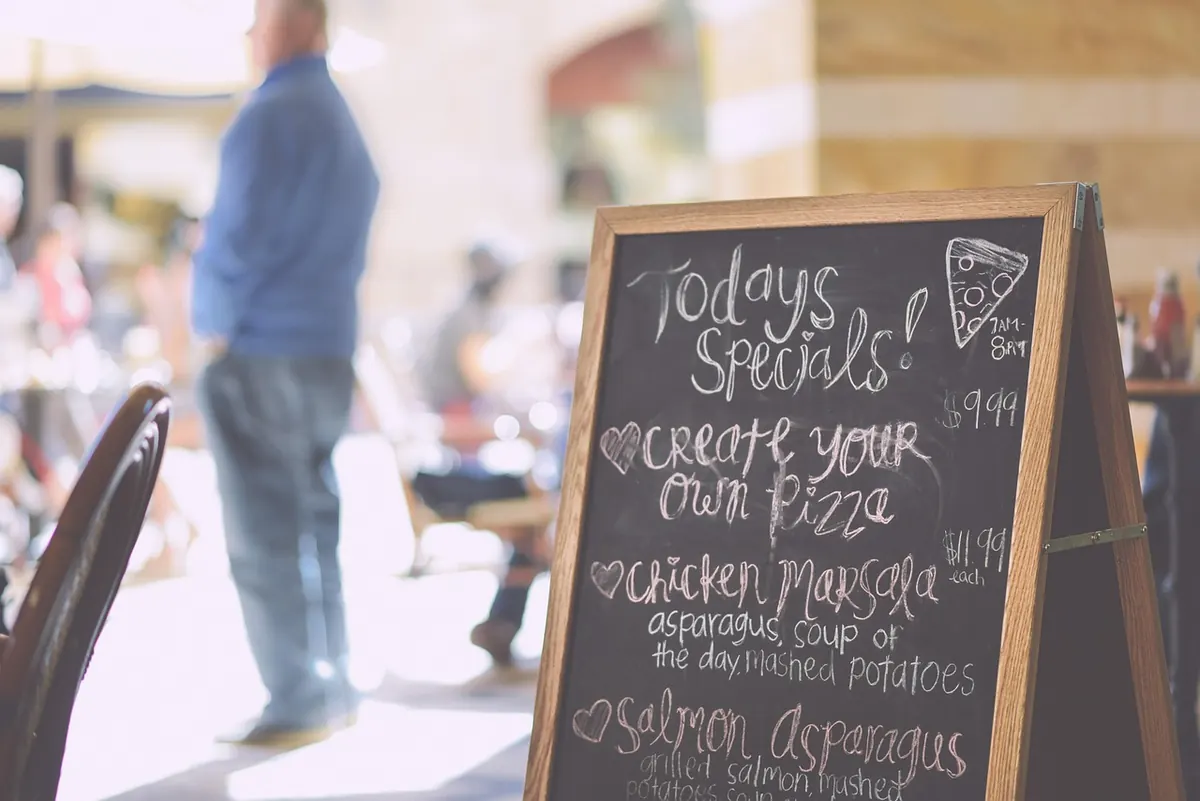
Local menus are usually in Italian first, sometimes only in Italian, with a small English insert tucked at the back for the patient. They are often photocopied, handwritten on an ardesia (the slate or paper sheet of the day), or typed with a proud typo or two. Look at the dish names. A trattoria names things after the family, the street, or the woman who taught someone to cook: i casoncelli della nonna, pici come li faceva Ada, trippa alla maniera di casa. That specificity is a good sign. It means the kitchen has a point of view.
Words that rarely appear in a local kitchen
Tourist menus lean on a generic pan-Italian repertoire, and some of it isn't very Italian at all. Spaghetti bolognese, fettuccine alfredo, garlic bread, pepperoni pizza, a bowl of "pasta with tomato sauce" and a side of chips — these exist abroad far more than in a family trattoria in Emilia-Romagna or Puglia. None of it is a crime. It is a translation of Italian food into something easier to sell.
Spaghetti bolognese — Fettuccine alfredo — Insalata caprese — Tiramisù
Read a menu like that and you are looking at a menu built for people who will only read it once.
Pricing Patterns That Give It Away
The clearest signals are not about cheap versus expensive. A good local restaurant can cost more than a tourist one, and often does. What you are looking at is how prices are structured.
In a local place, prices differ across the primi, because ingredients cost different amounts and the kitchen is buying them. There is usually a carafe of house wine at a modest price, sometimes a half-litre, sometimes wine on tap. You may see mezza porzione for a smaller appetite, or a bis of pasta. The cover charge (coperto) is small and mentioned quietly; bread arrives without discussion. Seasonal specialities may carry a higher price and a note that they're only here for a few weeks.
In a tourist place, something else is happening:
- Every pasta on the menu costs the same, to the euro.
- No house wine, only bottles, and the cheapest bottle sits at a price that would embarrass the region.
- A line for servizio appears at the bottom, on top of the coperto.
- Bread or olives arrive at the table and then show up on the bill.
- A fixed "menu turistico" looks very cheap, but drinks, coffee and coperto are excluded — and priced accordingly.
Also watch the printed photographs. A photo of a plate is the menu equivalent of a shrug: it says the dish is more or less the same every week, for every table, all year.
Seasonality: What Shouldn't Be on the Menu in July
A short menu is not lazy. It's a sign that someone went shopping.
Local cooking in Italy follows the market with a devotion that surprises visitors. Artichokes in spring. Wild asparagus for a few weeks, then gone. Fresh figs at the end of summer. Chestnuts and squash in autumn. White truffle in the late autumn, never in June. A restaurant that cooks this way has a menu that changes, either daily or every couple of weeks, and a waiter who can name what came in this morning.
Now look for the opposite. Tomatoes that taste of nothing in January. A caprese salad in February. Porcini in April. Fresh seafood in a town that's an hour inland and well above sea level. None of this is dangerous, but it tells you the kitchen is cooking from a supplier's list and a freezer rather than a market. If the menu has been laminated and the same in December as in June, it was never seasonal in the first place.
A useful trick: ask what's particularly good today. A local waiter answers with a specific dish and often a reason. A tourist-facing one points to the specials board and says everything is good.
Location, Timing, and Who's Eating
Walk 150 metres. That is often all it takes. A restaurant with a direct view of a cathedral, a famous bridge or the main piazza is paying rent on the view, and the food is usually the second consideration. Siblings and in-laws of excellent places tend to sit three or four streets out, where the rent drops and the lunch crowd comes from nearby offices.
Opening hours are more revealing than the design. A local kitchen opens for lunch around 12:30, serves till 14:30, closes, and pulls down the shutter one day a week (often Monday or Tuesday). Dinner starts late and the place fills after 20:30 with people who live nearby. A tourist-facing place is open continuously from 11am to midnight, seven days a week, because tourists eat when they're hungry. A man standing outside trying to talk you inside is a strong signal, and not the one he intends.
Then look at the tables. Locals eating in a group at lunch, a table of older regulars being greeted by name, someone standing at the bar for a coffee and paying at the till — these are the best reviews you'll get. If everyone in the room is holding the same laminated menu and reading it in a language other than Italian, you already know.
Read the Clues Carefully
Two honest cautions. First, none of these signs is proof on its own. Plenty of excellent restaurants sit on a beautiful piazza, and plenty of translated menus are attached to kitchens run by people who care. Context matters: a coastal town in August will have English menus because half the beach is foreign, and that same restaurant may be feeding locals in November. Second, a place can be both. Some trattorias are perfectly good and unashamedly tourist-friendly; they simply aren't where you'll learn the most about the region.
What you're hunting for is intention. Does the menu look written for a person, or for a crowd passing through? Does it change? Does the kitchen seem to have opinions?
A Five-Minute Read Before You Sit Down
Stand outside for a moment. You can learn most of what you need without a single word of Italian.
- Check the language order. Italian first is good. Italian absent is not automatically bad, but Italian last usually is.
- Scan for season and geography. Is anything on this menu impossible in this month, or in this landscape?
- Look at the prices. Do they vary? Is there a house wine? Any extra charges listed?
- Check the hours. A closed day and a short lunch window suggest a real kitchen with real habits.
- Look at the room and the street. Locals, no barker, no photo menu — sit down.
- Ask one question. "What's good today?" The answer will tell you more than the menu did.
And if you guess wrong — it happens, especially on a first night in a new city — you'll have lost one dinner, not your trip. Order a plate of pasta, drink the house wine, and walk two streets further tomorrow. The good places in Italy are rarely hidden. They're just a little less eager to be found.
Photo: stokpic / Pixabay
Related posts
More stories you’ll love reading